
We love our pets, but accidents on the carpet can be a bit of a headache. What looks like a small spot on the surface can actually spread deep into the carpet backing, underlay and even the floor beneath.
Urine also acts as a surfactant, which means it breaks down surface tension and seeps further into the fibres each time your pet returns to that spot. Over time, the affected area gets bigger and the smell stronger.
The good news is, you don’t have to put up with it. With the right approach, you can treat the stain, remove the odour and stop your pet from returning to the same place. Here’s how.
Quick Summary – Stop Urine Odour
- Blot fresh accidents quickly.
- Fresh stains: dish soap + warm water.
- Dried stains: vinegar + bicarb.
- Stubborn smells: enzyme cleaner to break down uric salts.
Need expert odour removal? Call 13 27 13.
What to do when an accident happens on the carpet
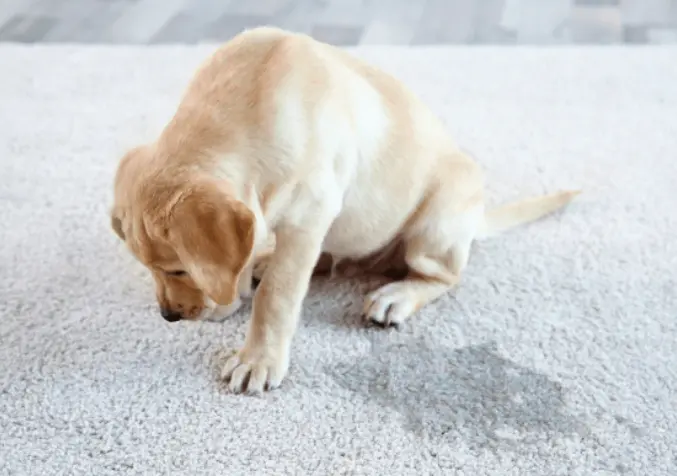
When your pet has an accident, it’s important to remove as much urine as possible straight away. The quicker you act, the better your chance of avoiding stains and lingering smells.
Place a thick absorbent towel — a folded beach towel works great — over the affected area and press down firmly. It helps to stand on the towel so it can draw the liquid up from deep within the carpet fibres.
Repeat this with a fresh towel or a dry section until there’s no more moisture transferring. It might take a few rounds, especially if it’s from a large dog like a golden retriever, but it’ll make a big difference to how well the carpet recovers.
What causes urine smell?

When urine dries, it leaves behind bacteria and uric salts. The bacteria thrive whenever there’s moisture in the air, which is why that familiar urine smell is stronger on humid or rainy days.
The uric salts also attract moisture and release their own unpleasant odour. So, the higher the humidity, the stronger the stench.
How to remove urine smell from carpet
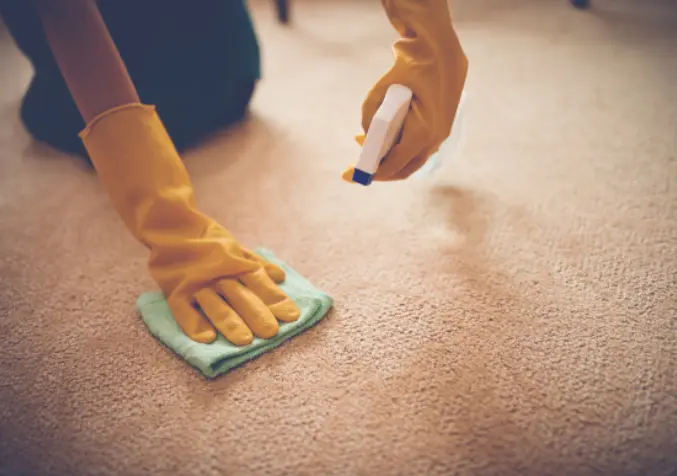
What you’ll need for urine odour removal
-
Absorbent towels or microfibre cloths
-
Measuring jug and bowl or spray bottle
-
Mild dish soap
-
White vinegar
-
Bicarbonate of soda
-
Enzyme-based pet odour remover
-
Wet-dry vacuum (optional but helpful)
-
UV torch to locate old spots (optional)
-
Nitrile gloves
Treating one-off urine accidents
If the stain has partially or fully dried, the first step is to rehydrate the area to draw out the remaining urine. Mix 2 cups of warm water with 1 cup of white vinegar, then pour it over the affected area.
Place a thick towel — folded over several times — on top and stand on it to absorb the liquid. Repeat this process with fresh towels until there’s no more moisture transferring.
This method works best if your pet has only had one or two accidents in that spot. If it’s a repeat issue, the urine has probably soaked into the underlay or subfloor, which is harder to fix at home.
Even after cleaning, it’s unlikely you’ll remove all of the urine and bacteria. For the best results, use a product that targets the bacteria directly. Electrodry’s Pet Odour Eliminator kills the bacteria, neutralises odours, and contains ingredients that discourage pets from returning to the same area — a handy bonus.
Treating carpet with multiple urine accidents
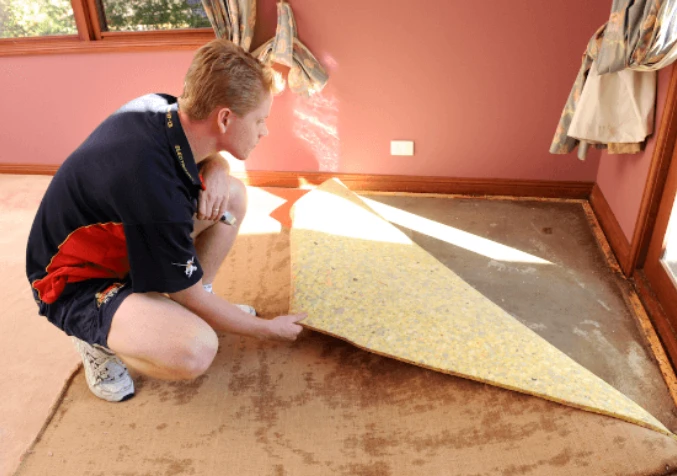
If your pet has used the same area several times, home cleaning may only go so far. The urine is likely deep in the carpet backing, underlay or subfloor, and may need professional treatment to fully remove the odour and bacteria.
When home remedies are enough
If your pet has only urinated once or twice in a small area, a combination of rehydrating, extracting and enzyme treatment is often enough to remove the odour.
After cleaning, let the area dry completely and check for any lingering smell. If the odour remains, it may be time to explore professional options.
When to call a professional
Repeated accidents often push contamination into the underlay and, in some cases, into the subfloor. Effective remediation often requires:
- Mapping the contamination with a penetrating moisture or salt meter.
- Injecting sanitisers to neutralise bacteria and uric salts in the carpet backing and underlay
- Hot water extraction to flush out the fibres
- Restoration work for heavy cases, which can include:
- Lifting the carpet
- Replacing the underlay
- Sealing the subfloor to lock in any residual odour
- Cleaning and treating the carpet backing with a disinfectant and odour counteractant
How Electrodry treats urine contamination
Our process starts by assessing the extent of the damage with a penetrating meter that locates uric salts in the carpet and underlay.
If the contamination is moderate, meaning the urine hasn’t reached the subfloor, we can:
-
Inject a specialised disinfectant to kill bacteria and neutralise uric salts.
- Apply the same disinfectant to the carpet fibres, then perform hot water extraction for a deep, thorough clean.
This is a proven method our technicians use regularly, with great success in restoring carpets.
If the urine has soaked deeply or your pet has used the same spot repeatedly, we may need to lift the carpet to inspect the underlay and subfloor. In more severe cases, the underlay may need replacing, and the subfloor sealed to prevent odours from returning. The carpet fibres and backing are then cleaned, disinfected, and treated with an odour counteractant.
If you believe your pet has only urinated once or twice in a small area, it’s worth trying the rehydration and enzyme treatment first. You might find that’s enough to fix the problem.
If the smell persists, though, professional help can make all the difference.
Need help with pet urine odours?
Electrodry’s team is highly trained in carpet stain and odour removal, including pet urine treatment.
Call 13 27 13 or contact us online for professional advice and service.
