
Is your sofa a bit on the nose lately?
That pong in your favourite lounge could be coming from pets, food and drink spills, sweat, or body oils. Fabric sofas are especially prone to holding onto smells, so we’ve put together these easy steps to help freshen things up at home.
If a store-bought deodoriser only masked the smell for a short while, don’t stress. This guide explains what causes sofa odours, how to neutralise them safely depending on the fabric, and when it’s best to call in the professionals – a common need in Aussie homes with pets, kids, and humid conditions.
Quick Summary – Deodorise a Sofa
- Sunlight kills dust mites, freshens fabric.
- Rubbing alcohol lifts body oils.
- Vacuum weekly; sprinkle bicarb 30+ min, vacuum again.
- Mist 1:1 vinegar-water, air-dry.
For a deep reset, book Electrodry upholstery clean.
Before You Start: Identify Odours and Check Fabric Care Labels
Common odour sources include: pet accidents, body oils, sweat, spilled food or drink, smoke, mildew from humidity, and residues from old cleaning products.
Next, check the care code label (usually under cushions or the lounge frame):
-
W: Safe to use water-based cleaners.
-
S: Solvent-only. Avoid water-based soaking.
-
W/S: Either water-based or solvent spot cleaning is usually fine.
- X: Vacuum only. No wet cleaning at home.
If you notice visible mould or a strong musty smell after a leak, skip the DIY approach and contact a professional immediately.
1. Let the sunshine in
Let your stinky sofa do a little sun-baking.
Fresh air and sunshine help freshen fabric lounges by reducing odour-causing bacteria and dust mites. The natural UV light in sunlight works like a disinfectant, breaking down the microbes that cause that musty smell.
If your cushions are removable, place them outside in bright shade or gentle sun for 30–60 minutes per side, flipping to improve airflow. Just avoid leaving delicate fabrics in harsh midday sun for too long, as this can lead to fading. A little sunlight goes a long way in reviving your lounge.
2. Freshen your lounge with rubbing alcohol
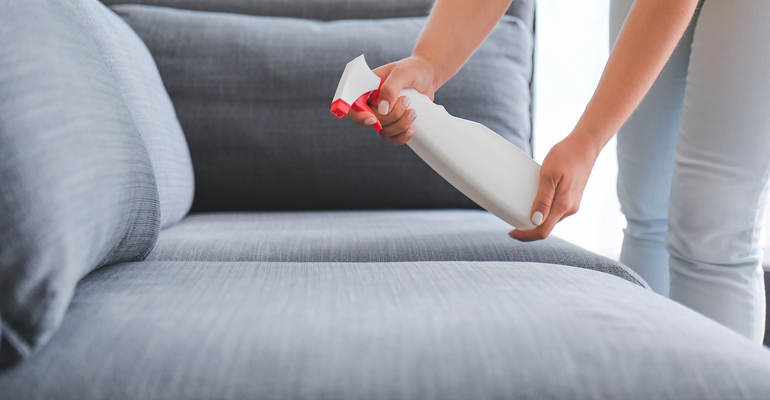
Rubbing alcohol is great for tackling odours left behind by body oils, food spills, and the bacteria that thrive on them.
Lightly spray the fabric with rubbing alcohol, then wipe it over with a clean cloth. This helps break down oily residues that hold on to smells.
If you notice dirty smears transferring onto your cloth, it’s a sign the build-up is more than a DIY job can handle — and time to call in a professional lounge cleaning service.
3. Use your vacuum cleaner attachments
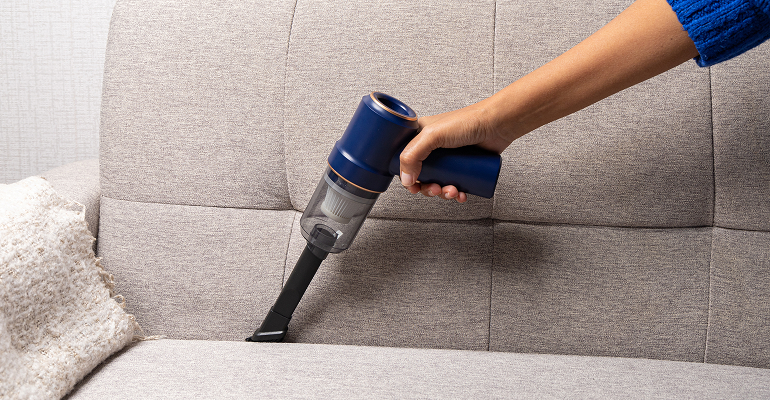
Most vacuum cleaners come with attachments that are perfect for upholstery. Use them once a week to clean your lounge, reaching into crevices where food crumbs, dust, and pet hair love to hide — and cause odours over time.
If your couch already smells, start by giving it a thorough vacuum to remove loose debris before moving on to the next steps.
4. Absorb odours with bi-carb soda
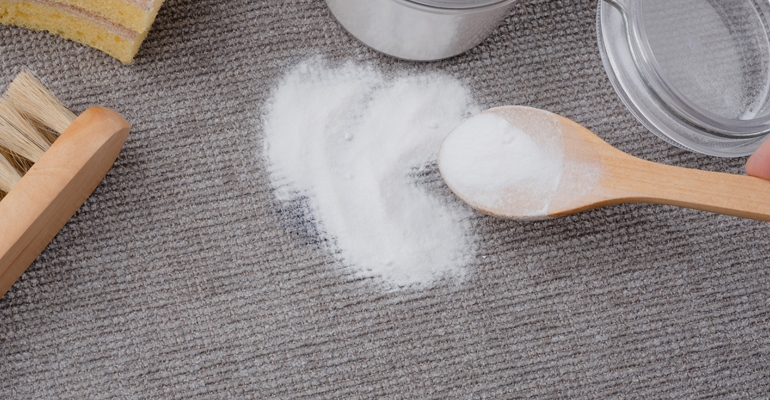
Sprinkle a thin layer of bi-carb soda over the affected area and leave it for at least 30 minutes — longer if you can — before vacuuming it up.
Bi-carb soda is alkaline, which means it helps break down grime, and its gentle abrasive action also absorbs lingering smells. It’s a simple, natural way to tackle stains and stinky odours in your lounge.
For strong smells, you may need to repeat the process more than once. Just make sure your vacuum has enough suction power to pick up the powder before you start.
Note:
Do not mix vinegar and bicarb on fabric. Use them on separate cycles.
5. Bring in the vinegar
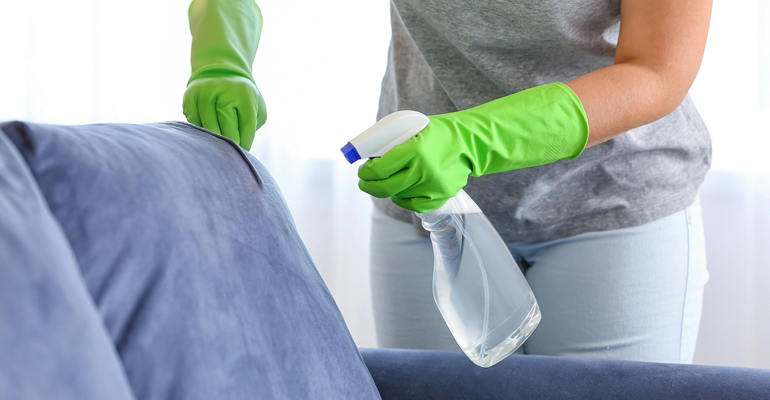
White vinegar is another simple option for tackling lounge odours. Always test it on a hidden section first to make sure it’s safe for your fabric.
Mix equal parts vinegar and water in a spray bottle, mist it lightly over the sofa, and let it air dry. Open a window to help with ventilation.
You might notice a vinegar smell at first (cue the fish and chips craving), but don’t worry — it will dry odourless. Vinegar is a mild acid that helps dissolve grime and neutralise odours, making it a natural deodoriser for fabric lounges.
RECOMMENDED READING
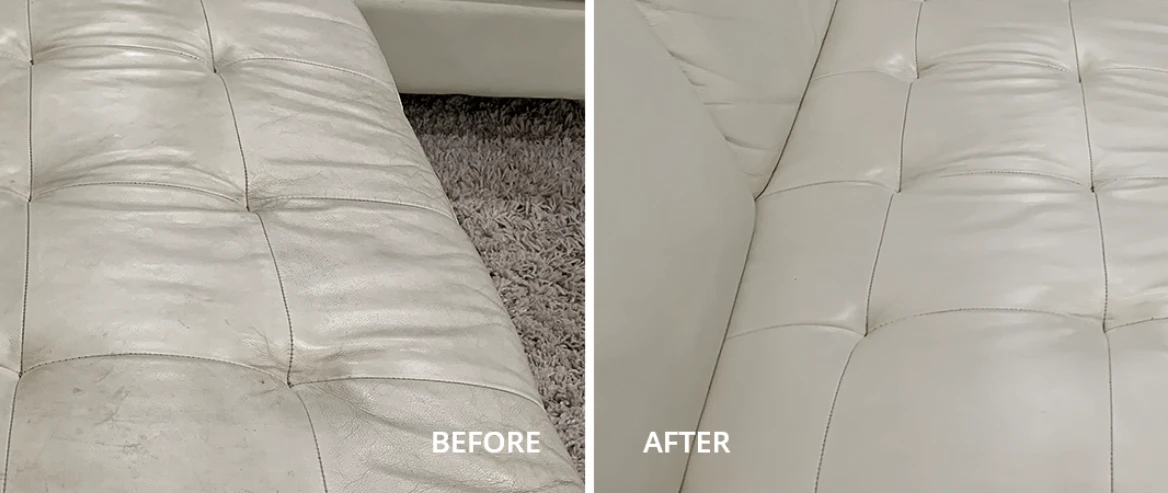
How to Clean and Condition Your Leather Lounge in Less Than 1 HourWhen you need enzymes, not deodorisers
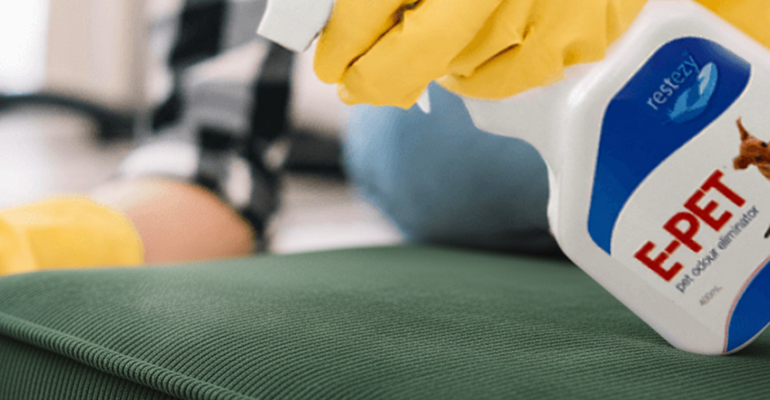
If the odour comes from pet urine, milk, or other protein-based spills, a regular deodoriser won’t cut it. Use a pet enzyme odour remover instead. Enzymes break down the organic residues that make smells return.
Follow the directions on the bottle for dwell time, then blot and let the area air dry. Repeat the treatment if the odour lingers.
Leather sofas: different rules
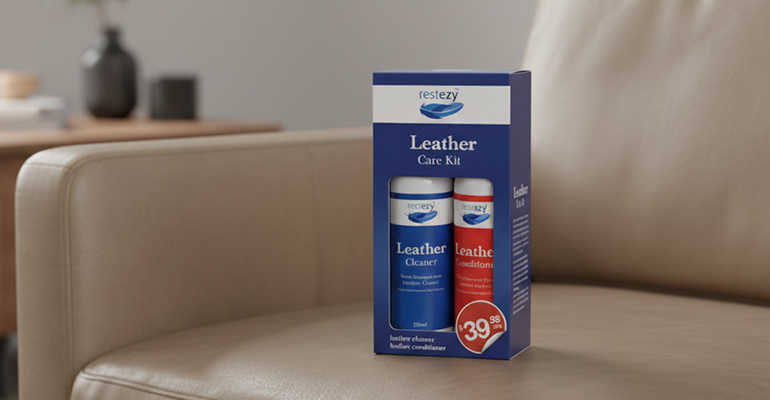
Leather lounges need gentler care. Never apply vinegar or bi-carb soda directly to finished leather.
Instead, wipe with a slightly damp cloth, dry it straight away, and follow up with a leather-safe cleaner and conditioner. While drying, keep the sofa out of direct, harsh sunlight to avoid damage.
Safety and fabric care checklist
-
Always patch test in a hidden area before cleaning.
-
Protect your flooring with towels when spraying or enzyme-treating.
-
Never oversaturate cushions — dry foam with airflow, not heat.
-
Keep solvents and sprays away from flames and out of children’s reach.
-
Avoid essential oils on upholstery. They can stain and may be unsafe for pets.
Keep smells away: simple routine
-
Weekly: Vacuum upholstery and crevices.
-
Monthly: Sprinkle a light layer of bi-carb soda, then vacuum.
-
Seasonal: Air cushions outdoors, rotate and fluff.
-
After spills: Blot immediately with white towels. Use water-only on W fabrics or a solvent spotter on S fabrics.
-
Humidity control: Keep rooms between 40–55% RH to discourage musty odours.
When Smells Stick Around It's Time to Call the Experts
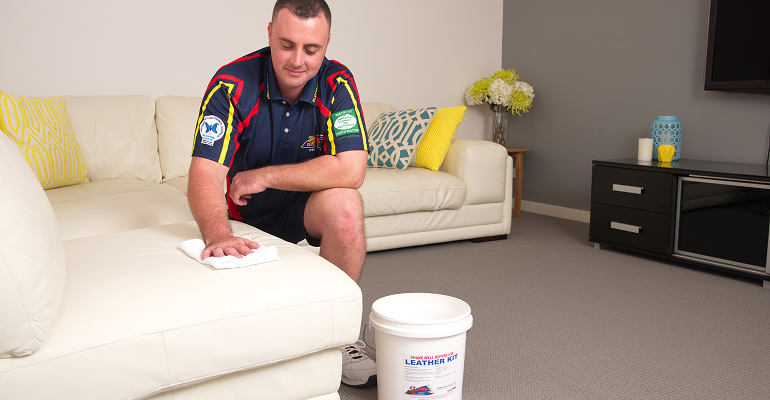
A deodorised couch isn’t always a clean couch. If odours or stains keep coming back, it’s a sign you need professional help.
Electrodry’s Upholstery Cleaning Service technicians are trained to safely clean most fabric types and use specialised treatments to target stubborn stains.
Every service now also includes Electro-Shield™, our long-lasting sanitiser that helps protect your lounge against germs, bacteria, and other nasties — keeping your home fresher for longer.
