Blood stains on carpet are usually the result of an unfortunate accident or injury and it’s easy to start panicking more about the stain, than the injury itself.
Don’t stress! Taking the right steps to treat a blood stain will mean that you can usually remove the stain with a minimum of fuss.
Quick Summary – Remove Blood Stains from Carpet
- Fresh: cold water + mild detergent, blot (don’t rub).
- Dried: hydrogen peroxide 3% (test first), dab and blot.
- Stubborn: enzyme cleaner to break down proteins.
Still there? Book Electrodry carpet cleaning.
Before You Start
-
Blot, do not rub. Press straight down with a clean, absorbent cloth to lift liquid without spreading.
- Work from the outside in. This helps prevent the stain from spreading further.
-
Test for colourfastness. Apply each solution to a hidden patch of carpet, fibre, wait 5 minutes, then blot.
-
Identify carpet type. Wool and other natural fibres are delicate. Use wool-safe products only.
- Remove solids. Lift with a spoon edge. Do not smear.
Step 1 - Remove as much of the blood as you can
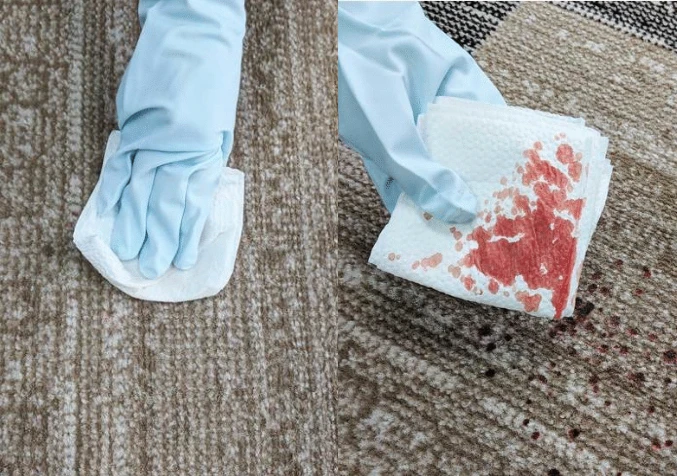
Blot up the blood with a clean white cloth or paper towel by putting downward pressure on the affected area. Don't wipe from side to side, as it will spread the stain.
Step 2 - Rinse with cold water and extract out the stain
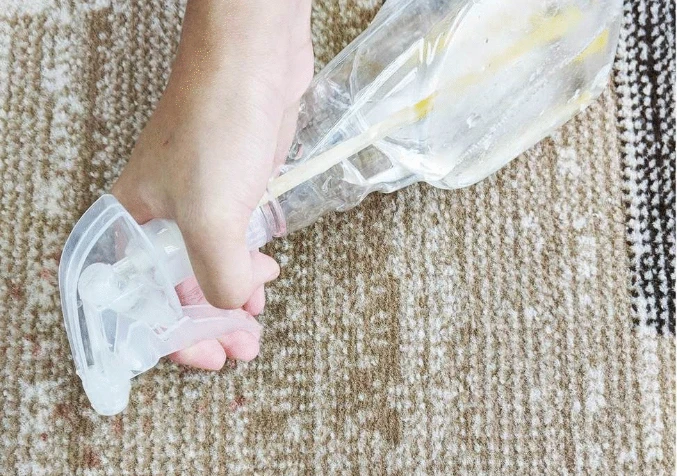
Rinse and extract the blood with cold water only. Hot water will set the stain and make it permanent.
Sponge on small amounts of cold water, then blot with a clean cloth. Repeat until blood no longer transfers to the cloth.
💡 Pro Tip: To draw out diluted blood effectively, fold a towel four layers thick, place it over the stain, and stand on it. The pressure helps pull moisture into the towel.
If available, you can also use a wet vacuum to extract water and reduce spreading.

RECOMMENDED READING
How To Make A Powerful All-Purpose Cleaner Using Vinegar and Citrus PeelStep 3 - Remove the remaining blood stains with a solution of dish soap and cold water
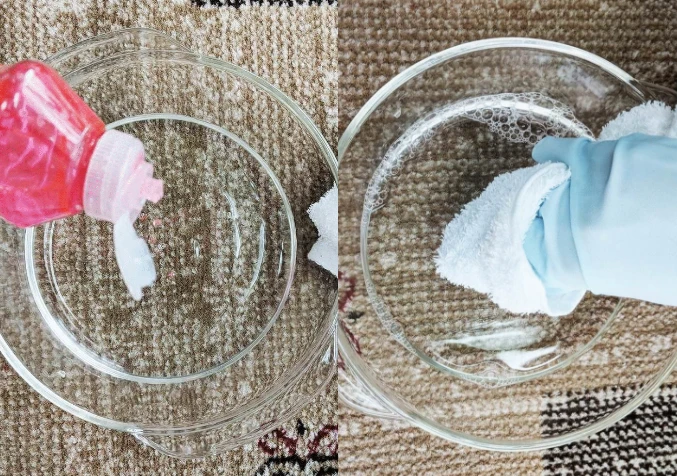
Mix a few drops of dishwashing detergent in a cup of cold water.
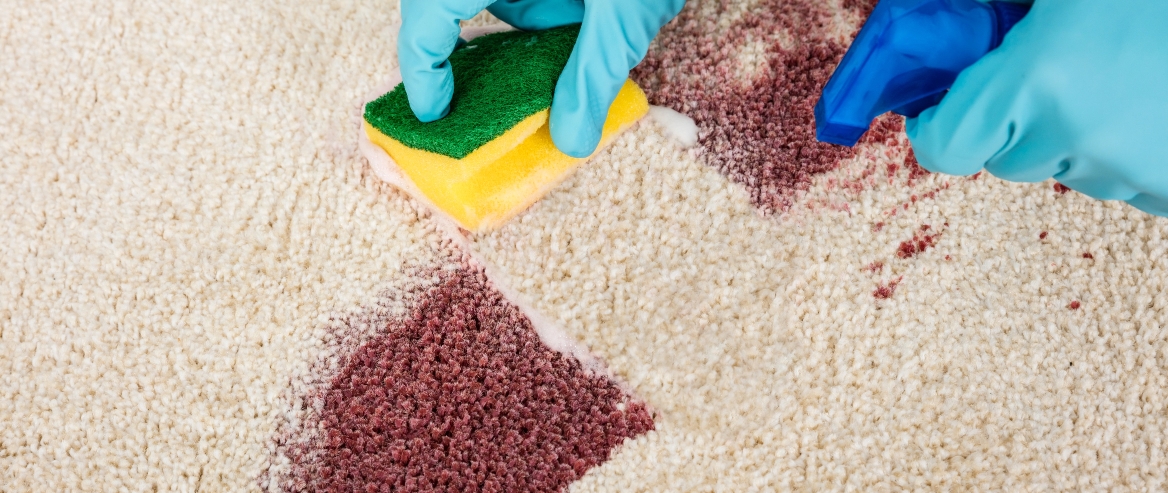
Using a sponge, gently work the solution into the blood stain — avoid rubbing hard, which can damage carpet fibres and cause them to hold stains.
Repeat as needed until no more colour transfers to your cloth or paper towels. When done, blot up excess water with a thick towel (standing on it helps draw out moisture).
Step 4 - If a stain remains, apply a carpet stain remover
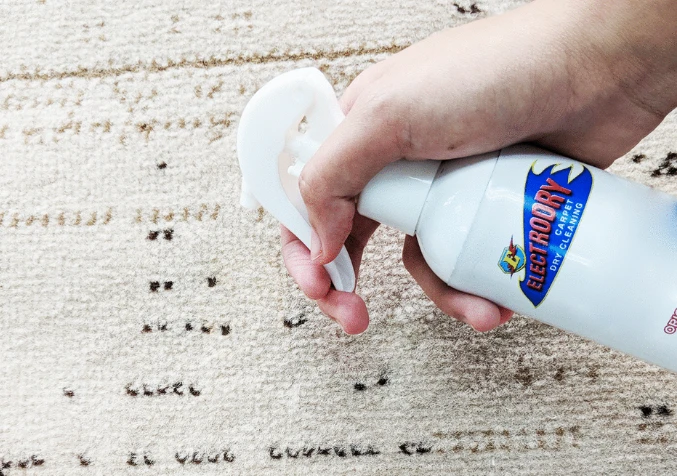
If the stain persists, apply a carpet-safe stain remover such as Electrodry’s Electro 3.
Set up a fan to dry the area quickly — fast drying prevents deep stains from “wicking” up to the surface.
You can also try soda water before Step 3 to help loosen the blood.
Keep in mind that not all stains are created equal. Factors like fibre type, stain age, and previous cleaning attempts affect results. Natural fibres, such as wool, are generally more difficult to clean.
If a large or dried blood stain remains, contact your Electrodry carpet cleaning technician. As long as the stain hasn’t been exposed to heat and isn’t too old, our team can usually remove all or most of it.
Safety First
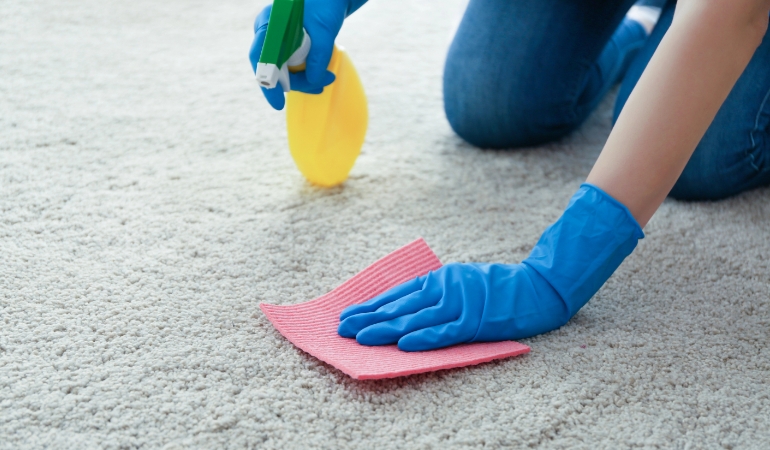
Always prioritise safety before cleaning. Blood is a biohazard, so take precautions.
-
Treat injuries before cleaning. Wear disposable gloves.
-
Ventilate the room. Never mix cleaning agents.
-
Keep children and pets away from the area until dry.
-
If using strong cleaning products, wear a mask or respirator to avoid inhaling fumes.
When To Call A Professional

Call a professional if:
-
The stain covers a large area or has soaked into the underlay.
-
The carpet is wool, silk, or high-value and you are unsure about chemistry.
- The stain is older, has been repeatedly heated, or keeps reappearing.
A trained Electrodry technician can apply controlled protein spotters, oxidisers, and advanced extraction methods to remove or significantly reduce blood stains.
If you’ve tried everything and the mark won’t budge, let our experts restore your carpet.
Visit Electrodry Carpet Dry Cleaning for professional care that’s safe for all carpet types.