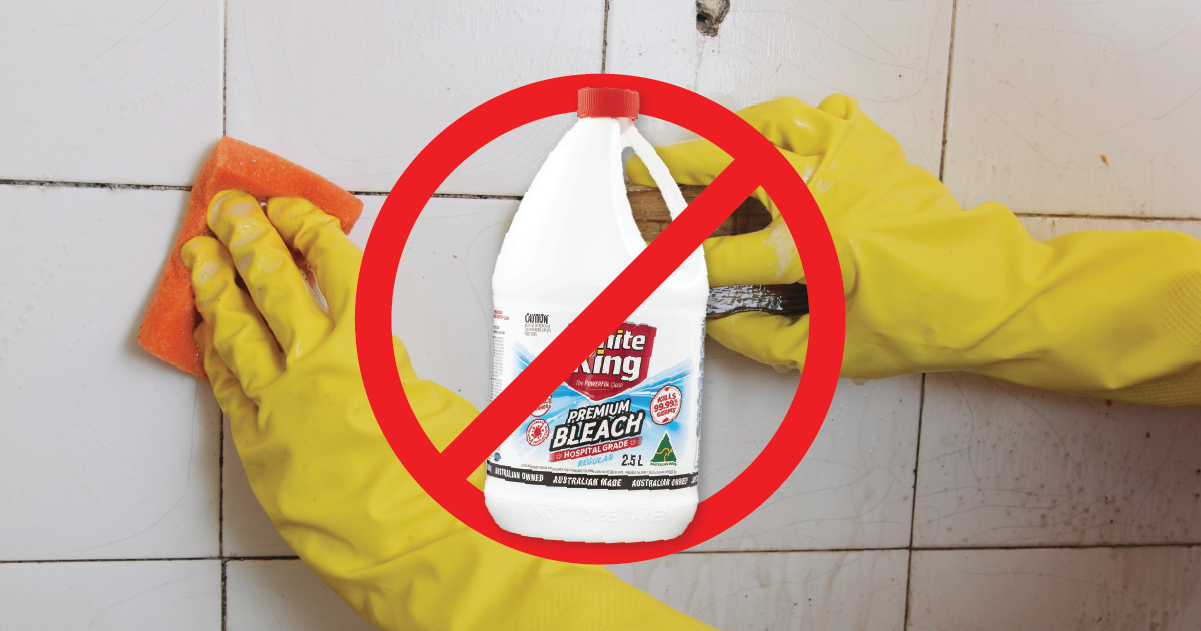
If you've been in a battle against mould, you'll know the dilemma: to bleach or not to bleach? Bleach can be thought of as a health hazard, but it can often seem like the only effective way to fight the darkness slowly invading your home.
Fact: Bleach doesn't actually kill mould! According to the ABC's resident mycologist, Dr. Neumeister-Kemp, bleach actually does more harm than good:
"The fungi contain melanin, and the bleach just takes the colour out, but the fungi are still there; you are just masking it… Six weeks later, it appears to come back, but it was never gone."
Quick Summary – Remove Bathroom Mould (No Bleach)
- Skip bleach: Only hides mould; roots remain and regrow.
- Natural spray: White vinegar + a few drops of tea tree oil; spray, wait 15–60 min, wipe clean.
- Stubborn spots: Use hydrogen peroxide; apply, sit, scrub lightly, rinse.
- Prevent: After showers, open the window or run a fan to keep the bathroom dry.
Need help? Call 13 27 13 or book online for Electrodry’s mould removal.
"The fungi contain melanin, and the bleach just takes the colour out, but the fungi are still there; you are just masking it… Six weeks later, it appears to come back, but it was never gone."

Dr Neumeister-Kemp, Mycologist
The Misconception About Bleach
Bleach has long been considered the go-to solution for dealing with mould. Its strong odour and whitening effect may give the illusion of a clean surface, but the truth is bleach doesn't eliminate mould at its root. Instead, it merely disguises the problem, allowing mould to resurface later on. Fortunately, there are natural alternatives that not only eradicate mould effectively but also safeguard your health and your home.
Top Natural Ways to Get Rid of Mould
There are four main natural cleaning products that can help you get rid of mould. These can be used in isolation or together, depending on your mould situation and what you have on hand.
1) Cleaning Mould with Vinegar and Tea Tree Oil

Vinegar, a mild acid, stands as an excellent mould killer. Unlike bleach, vinegar attacks the fungi mechanically and penetrates into their structure, effectively exploding and killing the mould. Paired with the antimicrobial properties of tea tree oil, the duo becomes a powerful mould-busting spray.
Application:
- For mild, minor mould problems, saturate the mould with a vinegar and tea tree oil solution, let it soak for 15 minutes, then wipe the area clean with water.
- For more serious mould problems, let the vinegar/tea tree solution sit for an hour before wiping it clean with water. Repeat the process if necessary until the mould is completely gone.
Studies Supporting Vinegar and Tea Tree Oil for Mould Cleaning
Several studies have highlighted the effectiveness of vinegar and tea tree oil in combating mould. A research paper published in the International Journal of Environmental Research and Public Health concluded that "vinegar exhibited potent antifungal activity against mould species commonly found in indoor environments."
Furthermore, a study conducted by the Department of Microbiology at the University of Sydney found that tea tree oil exhibited significant antimicrobial activity against mould and other fungi.
2) Cleaning Mould with Hydrogen Peroxide
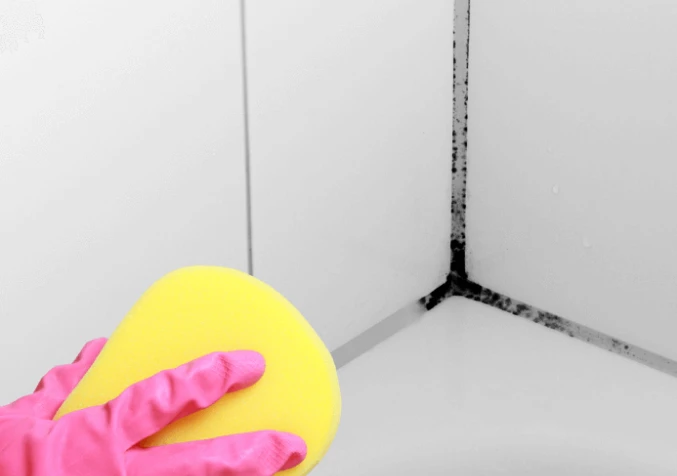
Hydrogen peroxide emerges as a remarkable and versatile cleaner, boasting potent anti-fungal, anti-viral, and anti-bacterial properties. This powerful solution offers a practical and eco-friendly alternative to bleach for tackling mould infestations.
Application:
- Transfer the hydrogen peroxide into a clean spray bottle for easy application. Spray the solution onto the mould-infested areas, ensuring complete coverage.
- Allow the hydrogen peroxide to work its magic on the mould. Let it sit for about 10-15 minutes, granting the solution sufficient time to penetrate and break down the mould's structure.
- After 10 to 15 minutes, gently scrub the treated surfaces with a sponge or soft brush. The combination of the solution's cleaning properties and your efforts will help remove the mould from the affected area. Finally, rinse the area thoroughly with water to wash away any remaining residue.
3) Cleaning Mould with Bi-Carb Soda
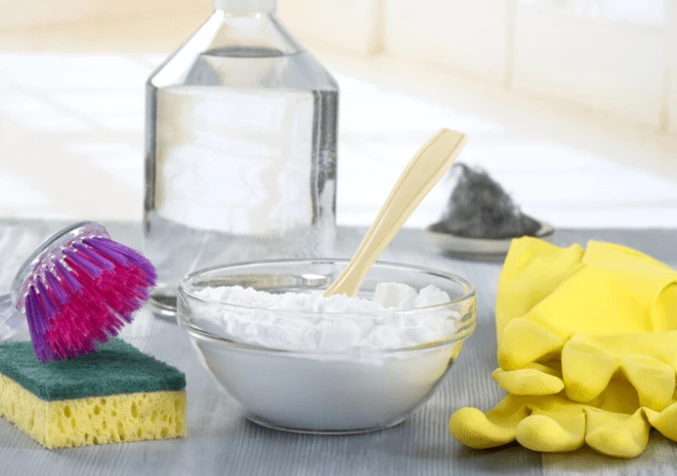
Bicarbonate soda is a natural disinfectant with little to no smell, making it a suitable alternative to vinegar for killing mould on non-porous surfaces. However, for porous surfaces like gyprock walls, vinegar remains the better choice
Application:
- Mix a small spoonful of Bi-Carb into a full spray bottle of water, then shake to combine.
- Spray the solution onto the mould, scrub it away, and then rinse.
4) Cleaning Mould with Clove Oil
Clove oil contains eugenol, a potent antifungal compound that kills mould spores rather than just bleaching the surface. It’s one of the few natural oils proven to stop regrowth.
Application:
- Mix ¼ teaspoon of clove oil per litre of water in a spray bottle.
- Lightly mist the affected area (don’t soak).
- Leave for 12–24 hours, then wipe clean.
- Ideal for tiles, painted walls, and ceilings.
Tip: Avoid using too much oil—it can stain light surfaces if applied too heavily.
5) Cleaning Mould with Grapefruit Seed Extract
Made from grapefruit seeds, which have natural antibacterial and antifungal properties, this extract kills mould spores without leaving any odour or residue. It’s also safe for pets and children.
Application:
- Mix 10 drops of grapefruit seed extract with 1 cup of water.
- Spray onto mouldy areas, leave for 10–15 minutes, then wipe away.
- No need to rinse — the residual extract continues working to prevent regrowth.
6) Lemon Juice (Natural Acidic Cleaner)
Lemon juice’s acidity and natural antibacterial properties make it useful for removing light mould or mildew, especially on grout or taps.
Application:
- Mix equal parts lemon juice and water.
- Spray or dab onto the mould, let sit for 10 minutessit 10 minutes, scrub, and rinse.
- Works best as a regular cleaner to prevent mould rather than for major infestations.
Preventive Measures for Mould Control

Preventing mould growth in the first place is as important as knowing how to get rid of it. Here are some proactive steps you can take to control mould in your bathroom:
Proper Ventilation
Ensure your room boasts sufficient ventilation to combat excess humidity and moisture. Use exhaust fans or open windows, especially during and after showers, to promote proper air circulation and combat mould's ideal breeding conditions.
Fix Water Leaks
Swiftly address any water leaks or plumbing issues to prevent moisture accumulation, which can create an environment inviting to mould growth. Prompt action in fixing leaks safeguards your bathroom against potential mould infestations.
Use Dehumidifiers
Consider employing dehumidifiers in areas prone to excessive moisture. These devices efficiently maintain a controlled humidity level, effectively curbing mould's ability to thrive in damp conditions.
Regular Cleaning
Maintain a regular cleaning routine to prevent mould from developing in your home. Wipe down tiles, walls, and shower curtains at consistent intervals, using natural mould-killing solutions like vinegar and tea tree oil to maintain a mould-free environment.
Wipe Surfaces Dry After Use
After showering, use a towel or squeegee to dry tiles, mirrors, and glass screens. This prevents moisture from lingering and feeding mould growth.
Keep the Bathroom Door Open
Leave the door open after showers to let steam escape and help the bathroom dry faster.
Wash Towels and Mats Frequently
Wash and dry towels and bath mats at least once a week. Always hang them in a well-ventilated area so they can dry completely.
Declutter Wet Areas
Limit the number of bottles and accessories in the shower. Fewer items mean better airflow and less trapped moisture.
Use Mould-Resistant Products
When resealing or renovating, use mould-resistant paint, grout, and silicone to reduce the risk of mould.
Insulate Cold Surfaces
Install insulation or use a heated towel rail to reduce condensation on cold walls, ceilings, and mirrors.
Check Hidden Areas Regularly
Look behind cabinets, under sinks, and around window frames for early signs of mould and treat them it straight away.
Monitor Indoor Humidity
Use a humidity meter (hygrometer) to keep indoor moisture between 40% and 60%. Run a fan or dehumidifier if levels are higher.
By adopting these proactive steps, you can safeguard your bathroom against mould infestations, ensuring a clean, healthy space for you and your family. Stay ahead in the battle against mould with these preventive measures, upholding a hygienic and inviting bathroom atmosphere.
Expert Mould Removal
While the natural methods mentioned above are effective for most cases, some mould infestations may require expert attention. If you have a severe mould problem that you haven't been able to eliminate, consider reaching out to expert mould remediation specialists like Electrodry. Electrodry Mould Removal's expertise and tools can remove mould at its source and ensure it remains gone for a full 12 months.
Get in Touch with an Electrodry Mould Removalist Now
Final Thoughts
Bleach may seem like a quick fix for mould issues, but it only masks the problem and allows mould to resurface later. Embracing natural alternatives like vinegar, tea tree oil, hydrogen peroxide, and bicarbonate of soda not only kills mould effectively but also ensures a safer, healthier environment for you and your family.
