
We're all guilty of it. After dinner, you finish the plates, give them a light rinse, and throw them in the dishwasher, letting the appliance do the heavy lifting.
This method can make your dishwasher really dirty and, in combination with soap scum and grease, makes your machine a breeding ground for germs and bacteria. If you're a repeat offender (hubby, I'm looking at you), it can also affect the performance of your dishwasher!
We've got four easy steps you can follow to make your dishwasher look – and smell – like new.
Quick Summary – Natural DIY Dishwasher Clean
- Clear: Remove food debris from filters + spray arms.
- Sprinkle: Add ½ cup bicarb to base; leave overnight.
- Run: Empty hot wash with 1 cup vinegar in top rack.
- Wipe: Clean seals + door with vinegar-soaked cloth.
- Deodorise: Add lemon peel or essential oil drops if needed.
Need help with deep kitchen cleans? Call 13 27 13 or book Electrodry online.
Things to Note Before Cleaning Your Dishwasher Naturally
Before you start, a few simple checks will help avoid damage and improve results:
-
Turn off the appliance before cleaning
-
Empty the machine completely
-
Check your manual, as some manufacturers limit vinegar use
-
Use white vinegar only
-
Rinse filters and spray arms first so cleaners can work properly
-
Use gentle tools like a microfibre cloth or soft brush
-
Ensure ventilation, as vinegar smell can linger
-
Clean monthly to prevent build-up
Important: Never use vinegar and bicarbonate soda at the same time. Always run them in separate cycles.
How to Naturally Clean a Dishwasher Using Vinegar and Bicarb Soda
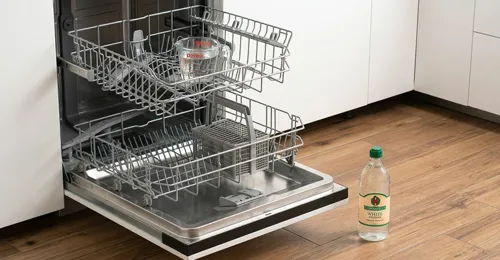
Start by removing the bottom rack and checking the drain area for any food debris.
Place a container with one cup of white vinegar on the top rack of an empty dishwasher and run a hot cycle. For better results, you can pause the cycle for around 10–15 minutes to let the vinegar soak and break down residue.
If there’s still a lingering smell after the cycle, sprinkle bicarbonate soda across the base and run a second short cycle.
Finish by wiping down the interior, door, and seals using a microfibre cloth and a simple vinegar-and-water solution.
Note: For most households, this method is enough to keep a dishwasher clean without needing stronger chemical cleaners.
RECOMMENDED READING
How to Make DIY All-Natural Cleaning Solutions: A Step-by-Step GuideOther Natural Methods to Clean Your Dishwasher
If you’re dealing with specific issues like limescale, odours, or build-up in certain areas, these alternatives can help.
1. Citric Acid Clean
Best for: Limescale and mineral build-up, especially in hard-water areas
Add two tablespoons of food-grade citric acid to the base or detergent compartment and run a hot cycle. Once finished, wipe down the interior to remove loosened residue.
2. Lemon Juice Rinse
Best for: Light grease and freshening
Place half a cup of lemon juice in a dishwasher-safe container on the top rack and run a short warm cycle. This works well for maintaining freshness between deeper cleans.
3. Hydrogen Peroxide Paste
Best for: Seals, corners, and visible grime
Mix bicarbonate soda with a small amount of hydrogen peroxide to form a paste. Apply it to problem areas, leave for 10–15 minutes, then wipe clean with a damp cloth and dry thoroughly.
4. Steam Refresh
Best for: Light maintenance between cleans
Place a bowl of hot water inside the dishwasher and leave it for 15–20 minutes without running a cycle. This helps loosen grime so it can be wiped away more easily.
5. Salt Deodoriser
Best for: Odour control
Sprinkle a small amount of coarse salt on the base, leave it overnight, then run a short rinse cycle the next day.
How to Keep Your Dishwasher Clean
Regular maintenance makes a noticeable difference. These simple habits help prevent build-up and keep your dishwasher running efficiently:
| Tips | Frequency | Benefits |
|---|---|---|
|
Scrape before loading |
Every use | Prevents clogs and build-up |
| Leave the door ajar | After each cycle | Reduces moisture and odours |
| Use quality detergent | Every use | Improves cleaning results |
| Wipe seals and edges | Weekly | Removes hidden grime |
| Clean filters and spray arms | Monthly | Maintains water flow |
| Run regularly | Ongoing | Prevents stagnant smells |
| Avoid overcrowding | Every load | Improves water circulation |
| Check spray arms | Every few months | Prevents blockages |
| Use a natural clean | Monthly | Keeps interior fresh |
| Inspect for wear or leaks | Every 3–6 months | Helps catch issues early |
Final Note
Keeping your dishwasher clean doesn’t need to be complicated. A simple routine using natural products can help maintain performance, reduce odours, and extend the life of your appliance.
