With chilly temperatures outside, it’s likely your pet is spending a little more time indoors at the moment.
There is a good chance you’re probably encountering more of their “accidents” too.
Unfortunately, pet urine and that signature smell are notoriously tough to get rid of. Here are our tips for tackling pet urine.
Quick Summary – Safe Pet Urine Fix
-
Fresh: Blot fast, then dab with warm water + dish soap; press dry.
-
Dried: Sprinkle bicarb, leave 20 min, vacuum. Follow with 1:2 vinegar + warm water.
-
Stubborn: Use enzyme cleaner (e.g., E-Pet). Heavy cases may need pro injection/extraction ($35/15min vs $300–$500 replacement).
Need help? Call 13 27 13 or book online.
*Prices were correct at the time of the last update and may change without notice.
Why is pet urine so damaging to carpets?
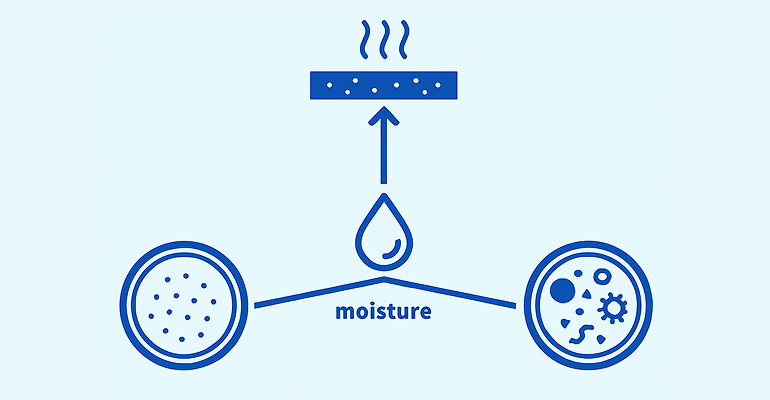
When urine dries, it leaves bacteria and uric salts. The bacteria grow when there is moisture present (this is why we smell the urine most on humid or wet days) and give off an "off gas" which is the terrible urine smell that many pet owners are familiar with.
It can depend on what the animal has eaten, but urine left on the carpet for a long time may oxidise the carpet dye and create a permanent stain.
Before you start: safety and setup
- Test for colourfastness. Try any solution on an inconspicuous area first.
- Avoid ammonia‑based products. Ammonia smells like urine to pets and can encourage re‑soiling.
- Never mix cleaning chemicals. Especially avoid mixing bleach and ammonia.
- Skip steam on urine. Heat can set stains and drive odour deeper.
- Ventilation matters. Open windows, run a fan or dehumidifier, and aim for quick drying.
- Tools you will need. White absorbent towels, bi‑carb soda, white vinegar, mild dishwashing liquid, a spray bottle, and an enzymatic urine cleaner.
How to get fresh pet urine out of carpet
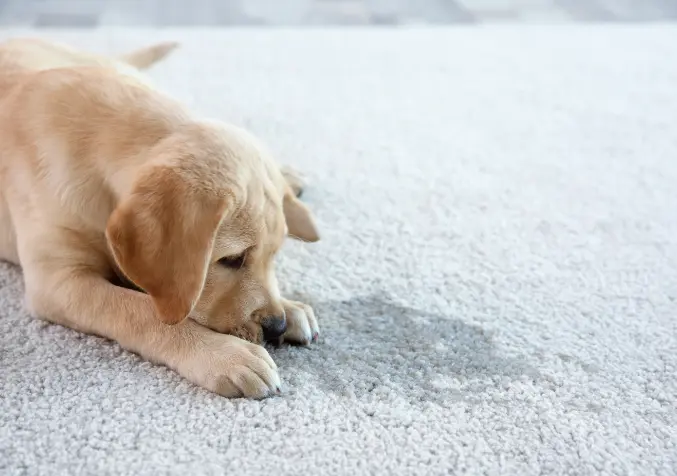
There are a few things you can do here, but the most important is to act fast. Stains and odours are much easier to treat while the urine is still fresh.
-
Blot the area with a dry, preferably uncoloured towel.
-
Combine a few drops of dishwashing liquid with warm water and cleanse the affected area. Dry with an absorbent towel on the stain while standing on it to add pressure.
-
Use a safe carpet cleaning solution to ensure all traces of the urine are removed.
How to get dried pet urine stains out of carpet
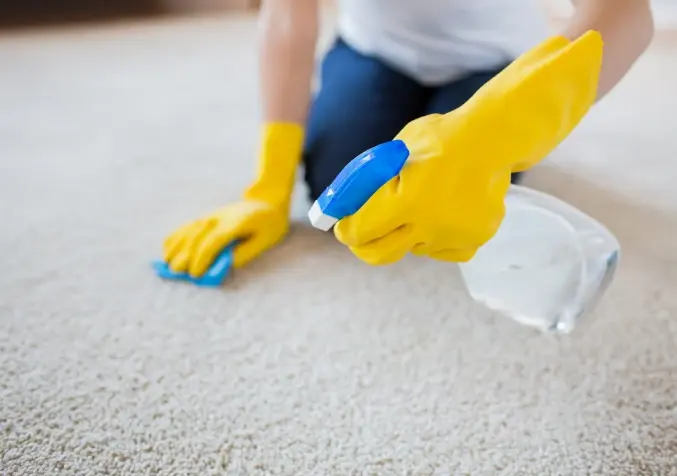
Dealing with dried stains can feel tricky, but don’t worry. With the right steps, you can break them down and remove the odour effectively.
-
Generously sprinkle bi-carb soda onto the stain. Let it sit for 20 minutes before vacuuming up..
-
Mix 1:2 of white vinegar and warm water and pour onto the affected area to help break down the uric salts and odour-causing bacteria.
-
Use folded up large white towels to soak the water up, adding pressure as you go. You may need to do this a few times to effectively soak up what you need to.
-
Sponge with warm water and thoroughly dry the area. You may need to open a window or use a fan to ensure it has dried properly.
What to do with stubborn pet urine odours
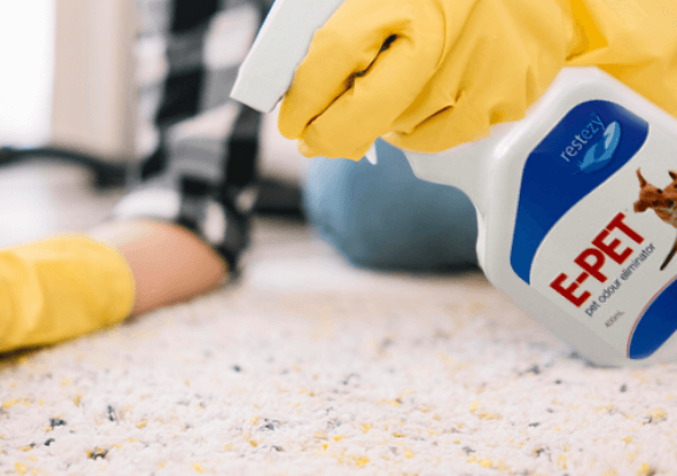
Use an enzymatic cleaner
Enzyme cleaners break down uric compounds and odour‑causing residues. Follow the product label. Saturate the area to the depth of contamination. Allow full dwell time and air‑dry to keep the enzymes working. Some formulas also include deterrents to reduce repeat marking.
For a more stubborn smell and stain, use an odour-eating enzyme spray such as E-pet Odour Eliminator or a store-bought enzyme-based product for treating urine odours.
These products use enzymes to break down the uric salts and odour-causing bacteria. E-Pet also contains active ingredients to deter the pet from returning to the same place. We all know how much they love doing that!
Find hidden spots
Use a UV blacklight at night to scan for faint yellow‑green fluorescence. Mark spots with sticky notes, then treat.
When to call a professional
If there have been repeated incidents in the same area, urine often soaks into the carpet backing and underlay. A carpet cleaning specialist like Electrodry can inject a targeted sanitising solution, neutralise uric salts below the face fibre, and perform controlled hot water extraction. This restores hygiene with minimal water and enables fast drying.
What to avoid
- Do not scrub. Friction can fuzz fibres and set stains.
- Do not over‑wet. Excess moisture can wick residues back to the surface and extend dry times.
- Do not mask odours with perfume. Always remove the source first.
Remove pet urine on upholstery, mattresses, and rugs
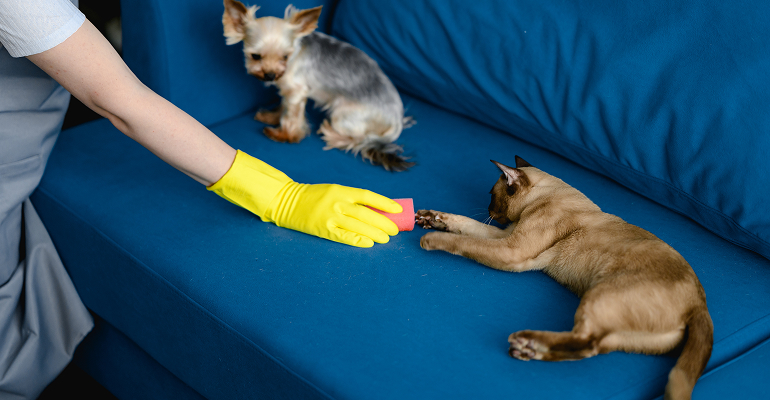
- Upholstery: Blot, then use the mild dishwashing liquid solution sparingly. Follow with an enzymatic cleaner suitable for fabrics. Avoid soaking foam cushions. Dry with airflow.
- Mattresses: Treat both sides if needed. Use towels to extract moisture by standing on them. Apply enzyme cleaner, allow full dwell, then air‑dry thoroughly before making the bed.
- Rugs on hard floors: Treat both the rug and the floor beneath. If odour persists from timber, clean the surface and consider a sealing primer after it is fully dry.
Please Note
If your carpet has been affected by repeated pet accidents, home remedies may not be enough. In these cases, a professional clean is required.
Your Electrodry technician will use specialised equipment to locate hidden uric salts, apply a disinfectant to kill bacteria and neutralise odours, then rinse the fibres with hot water extraction. Using minimal water and chemicals, we leave your carpet fresh, clean, and walk-on dry.
How to Prevent Pet Urine Problems
In an ideal world, your beloved pet wouldn’t do its business inside in the first place. And as much as we love them, sometimes accidents are unavoidable.
-
Place rugs in your pet’s high-traffic areas. A rug is much easier to clean than carpet and cheaper to replace if needed. There are plenty of stylish options that can match your décor.
-
Watch for signs your dog is about to wee and get them outside quickly. Be sure to praise them for doing the right thing.
-
Take your dog out straight after meals or naps, when their bladder is likely to be full. For spots they’ve used before, apply an enzyme cleaner and let it dry. Enzyme cleaners remove odour-causing bacteria, which helps stop dogs from returning to the same place indoors.
-
If the behaviour has only just started, consider a vet check to rule out medical issues.
-
Training can also help. Despite the saying, old dogs can learn new tricks. Mature dogs are often more disciplined than puppies and, with the right training, can be easier to manage. Training also keeps their minds sharp.
Please Note
A moderate additional charge applies for disinfecting the carpet backing and underlay using a specialised sanitising injection, as well as for treating stains. This is usually $35 per 15 minutes of treatment time. It’s a cost-effective alternative to carpet and underlay replacement, which can range from $300 to $500 per room.
*Prices were correct at the time of the last update and may change without notice.
