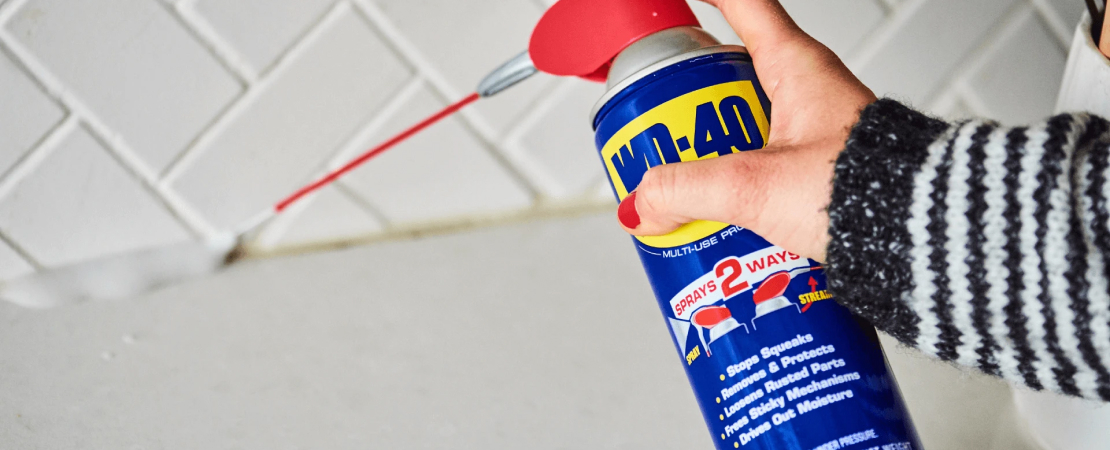
Most homes have a can of WD-40 sitting in the garage or cupboard, usually pulled out for the occasional squeaky hinge. But it can be handy for a lot more than that.
As professional cleaners, we’ve seen where quick fixes work and where they don’t. WD-40 can be useful in the right situations, as long as it’s used carefully.
This guide covers common WD-40 uses around the home, when they work best, and what to avoid.
Quick Summary – WD-40 Home Uses (With Care)
Fixes
- Frees stuck zips and drawers
- Helps remove adhesive and sticky residue
- Loosens rust and mineral build-up
- Helps with oily marks on concrete
Shine
- Removes fingerprints from stainless steel
- Freshens up tools like scissors
- Helps reduce watermarks on surfaces
Caution
- Avoid electronics and delicate fabrics
- Not suitable for food-contact surfaces
Call 13 27 13 or book online for Electrodry cleaning.
What is WD-40?
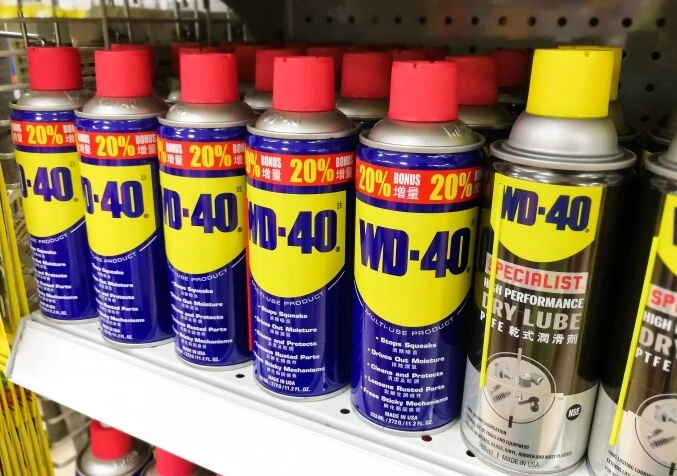
WD-40 is a multi-purpose spray designed to displace moisture, loosen rust, and provide light lubrication. It was originally developed in the 1950s to protect metal from corrosion.
Today, it’s commonly used for small maintenance jobs around the home, from freeing stuck fittings to removing residue.
Common WD-40 Uses Around the Home
1. Remove oil stains from concrete
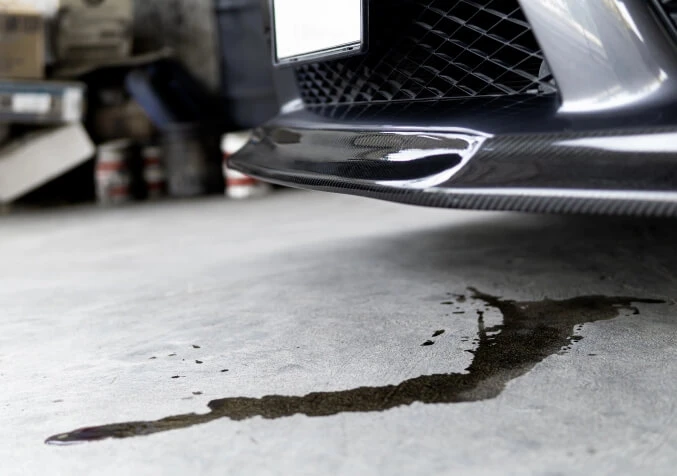
Spray onto the affected area, let it sit briefly, then blot with a clean cloth. This works best on concrete driveways or garage floors.
2. Loosen rust and mineral build-up in toilets
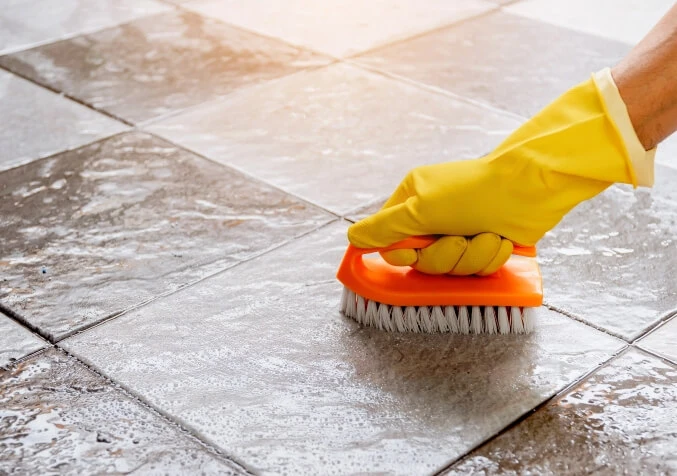
WD-40 helps soften rust or lime deposits, making them easier to scrub away. Use with good ventilation and rinse thoroughly after cleaning.
3. Remove paint and glue from skin
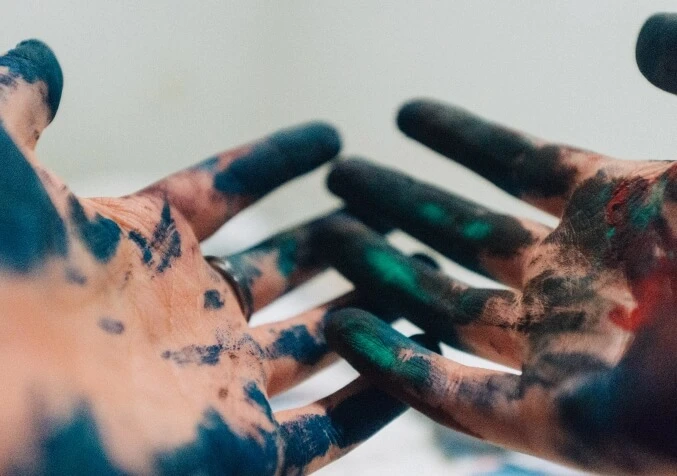
Apply a small amount, gently rub, then wash thoroughly with soap and water. Avoid prolonged contact.
4. Free a stuck zipper
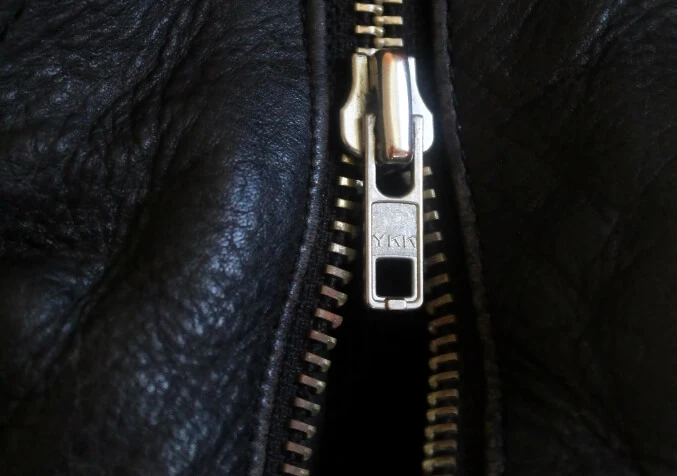
A light spray helps loosen a stubborn zip. Apply carefully to avoid getting any on surrounding fabric.
5. Lubricate sticky drawers
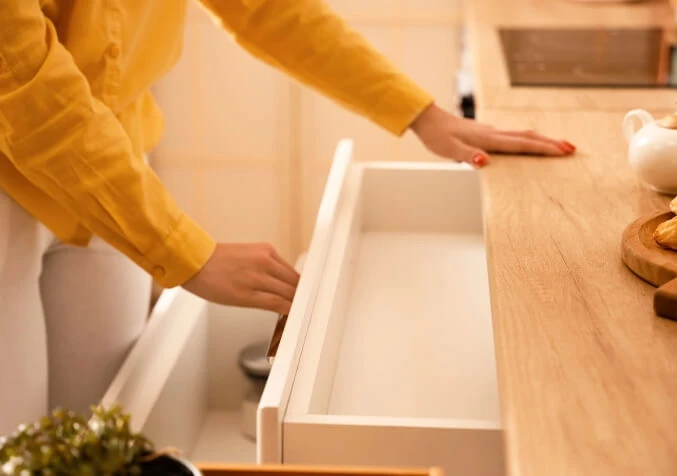
Spray lightly on drawer runners to help them open and close more smoothly.
6. Remove Crayon and Ink Stains from Fabric
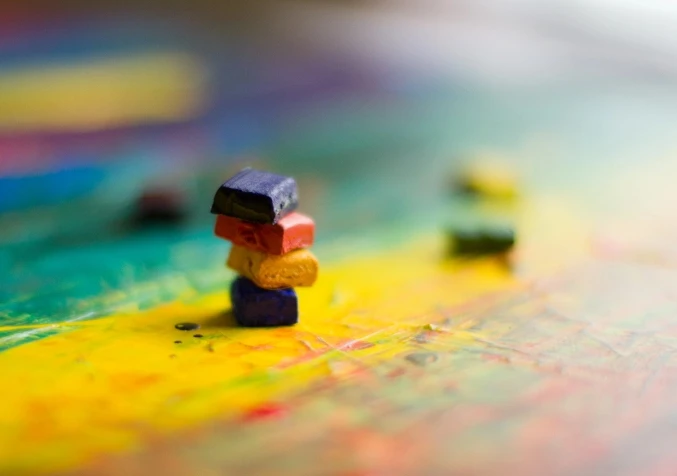
WD-40 helps loosen marks on hard surfaces like walls, making them easier to wipe away.
For deeper stains on carpets or lounges, a professional upholstery or carpet clean may be needed.
7. Clean fingerprints off stainless steel
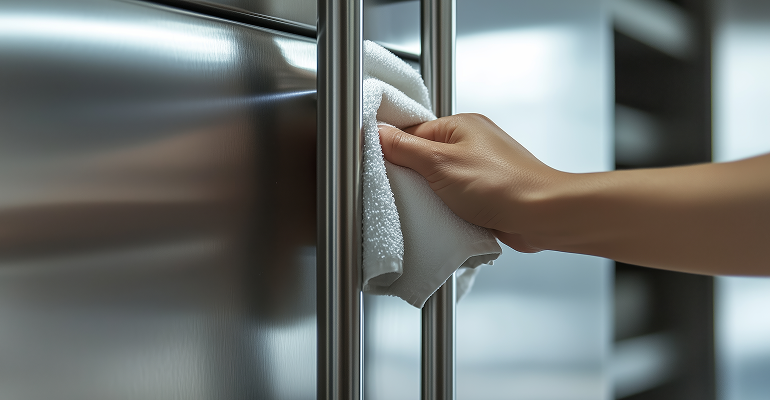
A light spray helps loosen residue, making it easier to wipe away smudges and marks. Wipe in the direction of the grain for a cleaner finish.
8. Help remove oily stains like lipstick
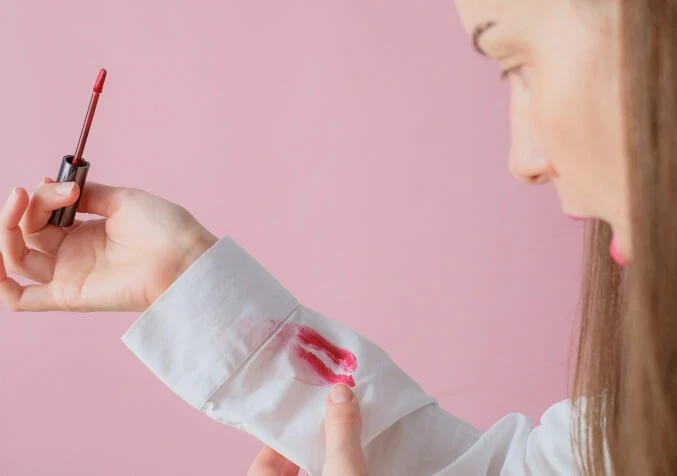
Apply to the stain, blot gently, then wash as normal. Test on a small hidden area first.
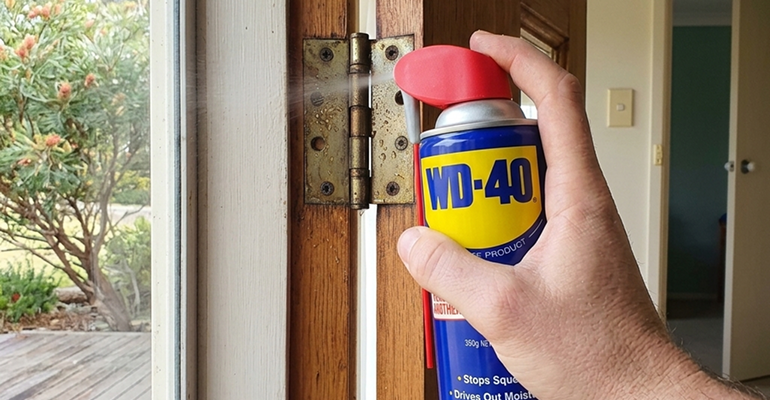
9. Stop squeaky door hinges
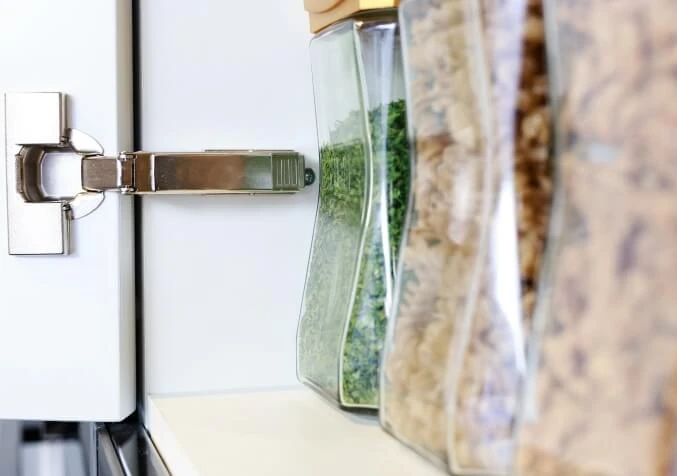
Spray a small amount onto the hinge and move the door to work it in. Helps reduce noise and friction.
10. Loosen rusty scissors
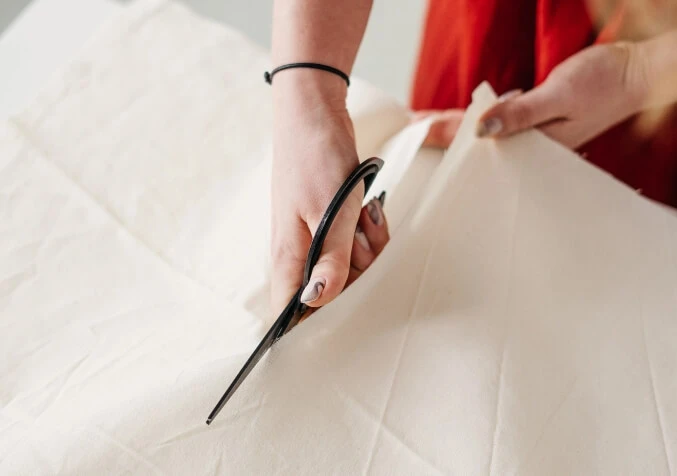
A quick spray can help free up stiff blades and improve movement.
11. Remove sticky labels and residue
Spray lightly, let it sit, then wipe clean. Works well on glass, metal, and hard plastics.
12. Protect garden tools from rust
After cleaning your tools, apply a light coat to help reduce moisture exposure and corrosion.
13. Clean outdoor furniture
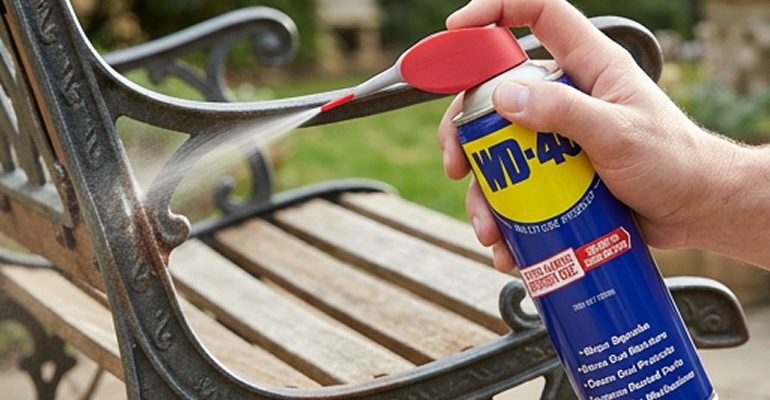
WD-40 helps lift grime and oxidation from metal or plastic outdoor furniture. Avoid use on fabric or painted timber.
14. Loosen stuck fittings and bolts
Spray onto tight fittings, wait a minute, then try loosening again. Useful for rusted or stuck parts.
15. Help remove tree sap and tar from surfaces
Apply to the affected area, let it break down the residue, then wipe clean. Wash afterwards to remove any remaining film.
16. Prevent rust on outdoor fittings
A light coating helps protect exposed metal from moisture, especially in coastal areas.
17. Freshen up tools and hardware
Use a light spray to clean and protect items like hand tools, hinges, and fittings.
18. Reduce water marks on some surfaces
A small amount helps loosen watermarks so they can be wiped away. Wipe thoroughly to avoid residue.
What Should You Avoid Using WD-40 On?
Electronics
Avoid using on phones, laptops, or appliances. It can damage internal components and attract dust.
Delicate fabrics
Materials like silk, suede, or rayon can be easily damaged or stained.
Food preparation areas
Not suitable for surfaces that come into contact with food.
Near heat or flames
WD-40 is flammable. Keep away from stoves, heaters, and open flames.
Medical or personal use
Not designed for skin care or medical use. Always wash thoroughly after contact.
Painted or polished finishes
Can affect coatings or finishes. Test first if unsure.
When WD-40 Works Best (And When It Doesn’t)
WD-40 works best for:
- Loosening and lubricating
- Breaking down residue
- Light surface cleaning
It’s not designed for:
- Deep cleaning
- Sanitising
- Removing embedded stains from carpets or upholstery
Need a Hand Beyond DIY?
WD-40 is great for quick fixes, but it won’t replace a proper deep clean.
For carpets, tiles, upholstery, or mould issues, a professional clean can make a noticeable difference.
Explore services like:
Book online or call 13 27 13 to organise a service that suits your home.
